
Speed Runner: Hyper Electric
Tuan Anh HoangAction
4.59.00 Reviews
- Version
- 1.1.0
- Installs
- 1.00M
- Age Rating
- Everyone
Screenshots
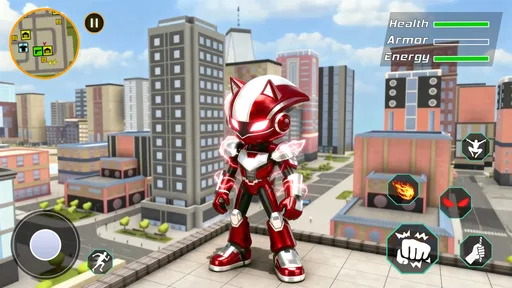
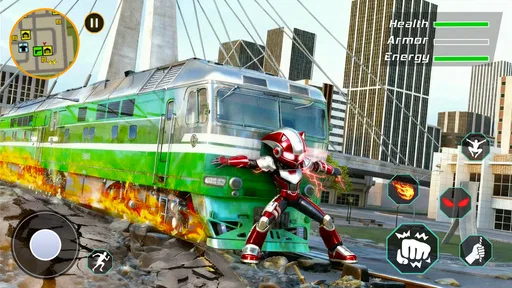
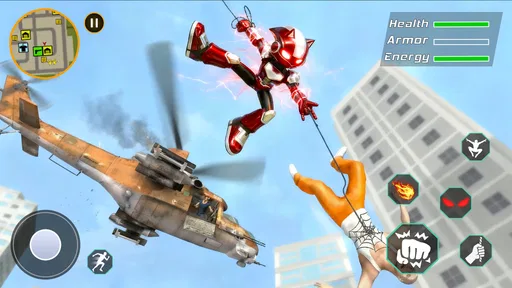
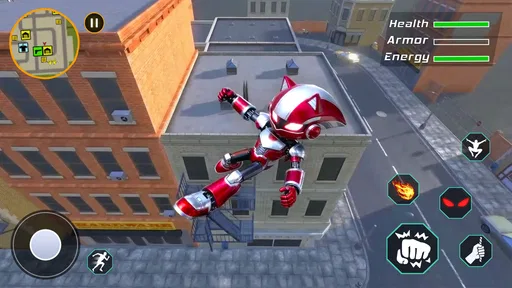
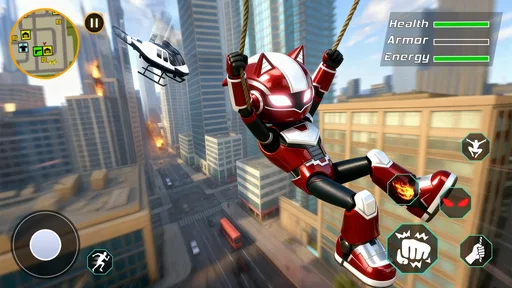
Our Review of Speed Runner: Hyper Electric
 Analysis by Appyee
Speed Runner: Hyper Electric is the kind of action game I open when I want immediate movement rather than a slow build-up. Its central appeal is easy to understand: I guide a fast hero through a crime-city setting, using dashes, airborne movement, and ragdoll-style reactions to keep the action moving. That sounds simple, but the feel depends heavily on timing. A game built around speed can be exciting when every input feels readable, yet frustrating when the screen becomes too busy or a mistake sends the character into an awkward recovery.
After spending time with it, I see a free-to-play action experience aimed at short, energetic sessions. It is not trying to replace a deep open-world game or a carefully balanced competitive title. Instead, it focuses on the pleasure of moving quickly, taking risks, and watching a character tumble through chaotic situations. The game comes from developer Tuan Anh Hoang and is suitable for Everyone, which makes its exaggerated action easier to approach with younger players in mind.
Fast movement is the main reason to keep playing
The first thing I noticed is that speed is not merely decoration here. It shapes how I read the environment and how I decide whether to take a safer route or commit to a more aggressive move. Dashing forward feels most satisfying when I use it as part of a chain rather than as a panic button. I get better results when I look ahead, choose a direction early, and treat the next landing point as carefully as the current leap.
That creates a useful distinction between feeling fast and simply moving quickly. The best moments come when the character travels through the city with a clear rhythm: launch, adjust, land, and continue. The ragdoll behavior adds unpredictability, so a failed movement can turn into a funny tumble instead of an immediate sense of punishment. I like that personality, although it also means the game can feel less precise than an action title built around strict combat timing.
Players expecting a traditional crime game should adjust their expectations. The setting provides the flavor, but the main attraction is the speed-run style movement. I would not choose this for detailed storytelling, realistic driving, or a large collection of carefully developed characters. I would choose it when I want a quick burst of movement and do not mind that the action is deliberately exaggerated.
The short description calls it “Speed Runner,” but my experience is broader than simply racing from one point to another. The fun comes from managing momentum and recovering from imperfect decisions. That makes the game approachable at first, while still leaving room to improve through repetition. I began by reacting to obstacles, then gradually started planning around them. That change is important because it gives the simple controls more depth than they initially suggest.
How I approach a fast run
I recommend beginning with a conservative route instead of trying to move at maximum speed immediately. The temptation is to dash whenever the ability is available, but that can leave the character poorly positioned for the next section. A better habit is to save movement options for moments when the path narrows, the landing looks uncertain, or the camera gives less time to react.
One useful technique is to separate movement decisions into two questions: where do I want to go, and how quickly do I need to get there? Those are not always the same. A slightly slower approach can produce a cleaner landing and keep the run alive, while a reckless dash may result in a long ragdoll recovery. This is one of the less obvious strengths of the game: its apparent simplicity rewards restraint as much as aggression.
I also found that short sessions suit the design better than marathon play. The repeated focus on timing and recovery can become tiring when I play for too long without a break. In a spare moment, though, the game works well. It is easy to understand, quick to restart mentally, and entertaining even when a run does not go perfectly.
What the ragdoll style adds—and takes away
The ragdoll presentation gives the action a playful edge. A mistake does not always look like a dry failure; it can become a dramatic fall, spin, or stumble that makes the next attempt feel worth trying. This is especially useful for casual players who dislike harsh, serious punishment. The tone stays lighter because the character’s physical reactions are part of the entertainment.
The trade-off is control clarity. When a character reacts physically in a loose or exaggerated way, I cannot always tell whether I made a poor decision or simply received an awkward result from the movement system. That uncertainty is acceptable in a casual action game, but it may bother players who want every failure to be perfectly explainable. If you prefer precise platforming with predictable animation, this may not be the ideal choice.
What happens during heavier play
The most demanding moments are the ones where several decisions arrive close together. A dash may need to be followed by an aerial correction, then a landing adjustment, all while the city environment is moving past quickly. These sequences test more than reflexes. They test whether I can keep track of the character’s position while also anticipating what comes next.
In those moments, I try not to stare only at the hero. Watching the space ahead is more useful because it gives me time to choose a landing direction. This is another practical tip that is easy to miss: the character is often less important than the empty area where I want the character to arrive. Looking at the destination helps reduce last-second inputs and makes the movement feel more deliberate.
Heavy action also exposes the difference between a fun failure and a frustrating one. If the game lets me understand why I fell, I am happy to retry. If the camera, movement, or ragdoll reaction hides the cause, the same sequence can feel random. My advice is to use the first attempt in a difficult section as reconnaissance. Learn the shape of the route before chasing speed. That approach makes the game more enjoyable and avoids wasting attempts on blind reactions.
For an everyday scenario, imagine having a few minutes before leaving home or while waiting for an appointment. This is where the game makes the most sense to me. I can start a session without committing to a long narrative chapter, enjoy a handful of energetic attempts, and stop when the moment passes. It is less suitable for a quiet evening when I want a calm, story-led experience or a game that rewards slow exploration.
Resource demands and the feel of extended sessions
I would treat the game as a visually active action title rather than a completely passive time-filler. Rapid movement, city scenery, and repeated physical reactions naturally create more work for a phone than a static puzzle screen. The practical result is that device condition matters. A phone that is already warm, crowded with background activity, or close to a low battery may provide a less comfortable session than a freshly started device.
I do not see a reason to assume that every phone will behave identically. The minimum operating-system requirement is Android 7.0, so the game is accessible to a broad range of Android devices, but operating-system compatibility alone does not guarantee the same experience on every handset. Older hardware can remain compatible while still feeling less comfortable during busy movement. If your phone is modest, I would test a short session first rather than judging it from the opening moments alone.
My practical routine is simple: close demanding apps before playing, avoid starting a long session while the phone is already hot, and keep the screen clear enough to read movement. These are not special settings or hidden tricks; they are habits that help a fast action game feel more consistent. They also make it easier to tell whether a problem comes from the game or from the device being under pressure.
Stability, recovery, and the cost of a mistake
Reliability matters more in a speed-focused game than in a slower one because a small delay can change the outcome of a movement. My impression is that the game works best when I give it clean, uncomplicated input. Rapidly changing direction at the last instant is where I feel the greatest risk of losing control, especially when the character is already airborne or recovering from a tumble.
Recovery is part of the design rather than an afterthought. The ragdoll moments can reset the mood, but they also interrupt momentum. I learned to think of recovery as a decision point: if the character lands safely, continue with measured inputs; if the character begins to tumble, stop trying to force the next move and wait for a stable position. Repeatedly tapping during a bad recovery usually makes the situation feel less predictable.
This leads to a useful trade-off. Players who enjoy improvisation may find the loose reactions entertaining, while players who want uninterrupted flow may see them as friction. I fall between those groups. I like the visual comedy and the sense that a failed move is not always identical, but I would not describe the game as a precision instrument. It is better understood as a fast, playful action game where control and chaos share the same space.
The current version is 1.0.9, and that gives the game a clear version identity when comparing the experience on different devices. I still recommend keeping expectations practical: a version number does not change the fact that performance can vary with hardware, heat, and background load. For a fair test, I would play several short sessions rather than deciding from one unusually smooth or unusually busy run.
Who will enjoy it, and who should choose something else
I think this game suits players who like immediate action, exaggerated movement, and the satisfaction of improving a route through repetition. It is also a reasonable choice for someone who wants a free game that can be picked up quickly. With an average rating of 4.5 from around 2.2 thousand ratings and more than 1 million installs, it has clearly attracted a substantial audience, though those figures should be read as signs of interest rather than proof that every player will enjoy the same style.
The free price removes the biggest barrier to trying it. I can recommend installing it to see whether the movement feels natural on a particular phone, especially because fast controls are personal. One player may enjoy the loose ragdoll response, while another may find it imprecise after only a few attempts. The Everyone age rating also makes it easier to consider for family-friendly casual play, although younger players may still benefit from guidance about taking breaks during repeated attempts.
I would skip it if my priority were a deep campaign, realistic crime drama, competitive ranking, or carefully authored exploration. Those goals call for different kinds of games. I would also look elsewhere if I became frustrated by unpredictable recoveries or if I needed a title that remained equally comfortable during very long sessions. The game’s strongest quality is its burst of kinetic fun, not its ability to cover every action-game preference.
Compared with a conventional endless runner, this experience feels more physical and less purely lane-based because the appeal comes from dashing, airborne movement, and ragdoll reactions. Compared with a large open-world action game, it is much easier to enter but far less concerned with world depth. Compared with a precision platformer, it offers more comic unpredictability and less exact control. Those comparisons help place it correctly: it is a middle ground for players who want movement-driven action without the commitment of a larger production.
Small habits that make the game more enjoyable
Use the opening attempts to learn safe landing areas instead of chasing speed immediately. A stable route usually produces better runs than constant emergency dashes.
Look at the space ahead of the character when preparing a jump or dash. Choosing the destination first reduces frantic corrections in the air.
During a ragdoll recovery, pause your inputs and let the character settle before planning the next move. Trying to correct every frame can create more confusion.
Play in short bursts when the phone is warm or already busy. This helps separate ordinary device strain from the game’s own movement quirks.
Judge the game by whether you enjoy repeating a route, not by whether the first run feels perfect. Its appeal grows when improvement becomes part of the loop.
These habits do not turn the game into a precision challenge, and they cannot remove every awkward moment. They simply make its design easier to read. The biggest improvement comes from accepting that speed is not always the same as progress. Sometimes the fastest-looking move produces the slowest recovery, while a controlled landing keeps the entire run moving.
My overall performance verdict
Speed Runner: Hyper Electric works best as a compact, energetic action game with a clear personality. I enjoy the combination of rapid movement and comic physical reactions, especially when a risky decision turns into an unexpected but recoverable tumble. The crime-city setting gives the action a recognizable backdrop, while the movement keeps the focus on what I am doing rather than on lengthy exposition.
Its limitations are closely connected to its strengths. The loose ragdoll style can make failure entertaining, but it can also make control feel less exact. Fast sequences are exciting when the route is readable, yet demanding when several corrections arrive at once. Device condition may also influence comfort during heavier sessions, so I would not judge the experience solely from its compatibility with Android 7.0 or from the fact that it is free.
For me, the right recommendation is conditional but positive: try it if you want quick bursts of speed-based action, enjoy learning movement through repetition, and can tolerate a little chaos in the recovery. It is particularly good for short breaks and casual attempts where a failed run is still amusing. I would not recommend it as a substitute for a story-heavy action game or a highly precise platformer.
The developer, Tuan Anh Hoang, has shaped the game around a straightforward idea and gives that idea enough room to be enjoyable: move quickly, take risks, and deal with the consequences. The result is not a universal action game, but it does not need to be. Its real strength is the playful tension between control and chaos. If that balance sounds appealing, the free entry point makes trying it a sensible choice.
Verdict
Strengths of Speed Runner: Hyper Electric
- Fast-paced levels make every run feel exciting.
- Simple controls are easy to learn on mobile.
- Bright visuals make obstacles easy to recognize.
- Short stages suit quick gaming sessions.
- Increasing difficulty keeps experienced players challenged.
Limitations of Speed Runner: Hyper Electric
- Frequent retries may feel repetitive after extended play.
- Precise timing is required on later stages.
- Limited variety can reduce long-term freshness.
- Some obstacles may feel difficult to see at high speed.
- Progress can depend heavily on memorizing level patterns.
Other Releases by Tuan Anh Hoang
View All
Real Car: Drift Racer 3D
Racing4.6
Similar Picks in This Category
View All
Temple Run 2: Endless Escape
Imangi Studios4.1

PUBG MOBILE
Level Infinite4.3

Free Fire: 9th Anniversary
GARENA INTERNATIONAL I4.4

Talking Tom: Hero Dash Run
Outfit7 Limited4.3

slither.io
Lowtech Studios3.9

Sniper 3D:Gun Shooting Games
Wildlife Studios4.6
Frequently Asked Questions
What is Speed Runner: Hyper Electric?
Speed Runner: Hyper Electric is a fast-paced arcade running game focused on reflexes, timing, and high-speed movement. Players guide an electric-powered runner through challenging courses filled with obstacles, jumps, hazards, and opportunities to collect rewards. Its main appeal is quick, energetic gameplay that is easy to understand but increasingly difficult to master as the speed and complexity of each run increase.
How do you play Speed Runner: Hyper Electric?
The game is built around simple controls, making it suitable for short sessions on a mobile device. You generally need to move the runner, avoid obstacles, jump or change direction at the right moment, and react quickly to changing sections of the track. Success depends less on complicated commands and more on learning patterns, improving timing, and replaying levels to achieve longer runs or higher scores.
Is Speed Runner: Hyper Electric free to download and play?
Speed Runner: Hyper Electric can generally be downloaded without an upfront purchase, although the exact availability and payment model may depend on the Android or iOS store listing in your region. Free versions of arcade games may include advertisements, optional purchases, or unlockable content. Before installing, check the official store page for current pricing, in-app purchase details, and any age or content information.
Does Speed Runner: Hyper Electric require an internet connection?
Whether an internet connection is required can vary according to the version of the game and the features being used. Basic running gameplay may work offline, while advertisements, cloud saves, updates, leaderboards, or other online services may need connectivity. If you want to play while traveling or without mobile data, it is best to test the game offline after installation and review its current store description.
Is Speed Runner: Hyper Electric suitable for all players?
The game is likely to appeal most to players who enjoy arcade challenges, rapid reactions, and repeating levels to improve their performance. Its controls may be easy to learn, but the increasing speed and obstacle patterns can become demanding, especially for younger children or players who prefer relaxed gameplay. Review the listed age rating, advertisements, purchase options, and device requirements before downloading.
Play our best games!


